Loading...
Serving Horizon City, TX and surrounding areas. (915) 944-0236
Serving Horizon City, TX and surrounding areas. (915) 944-0236
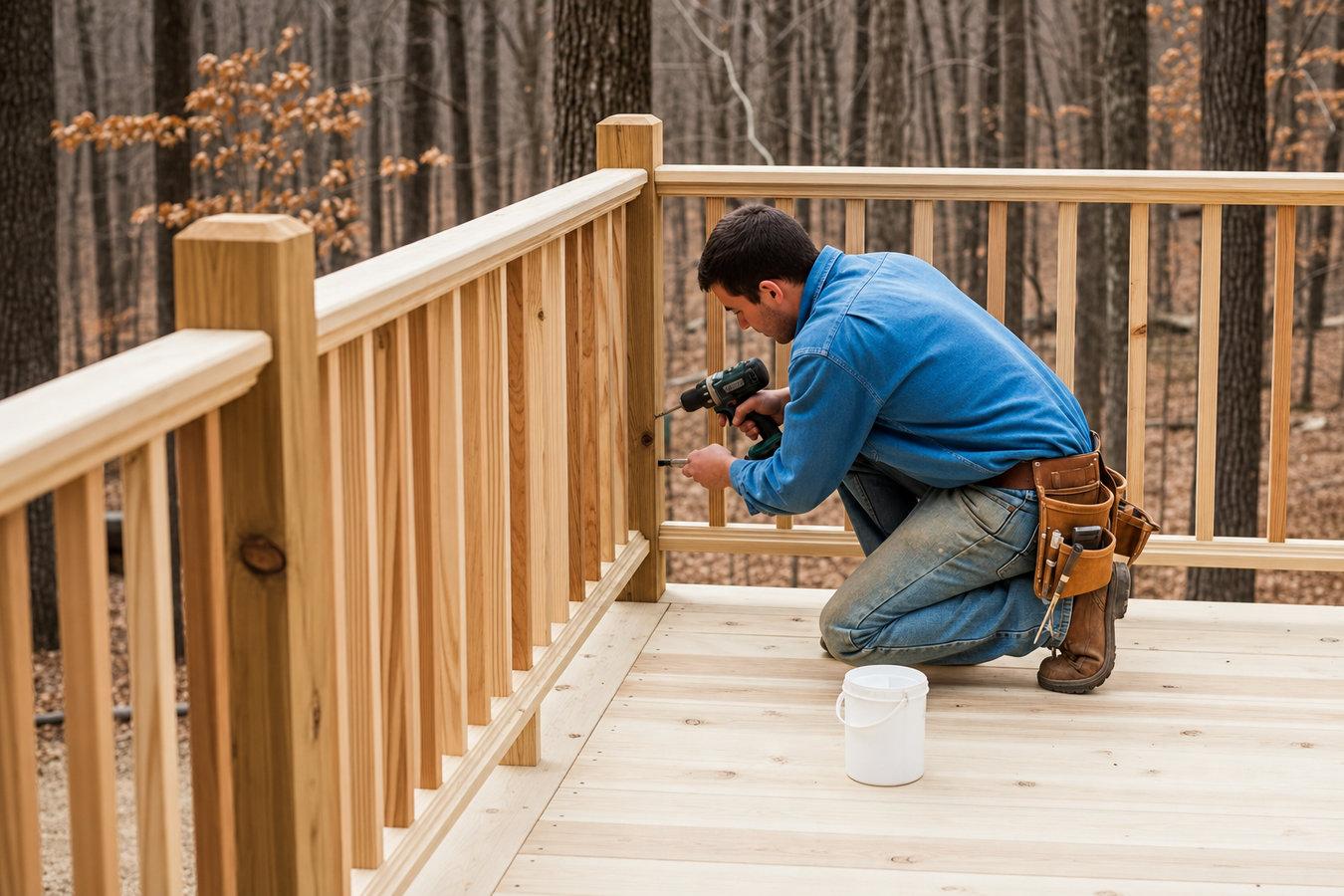
A railing that wobbles, cracks, or pulls away from the deck is not just an eyesore - it is a safety problem. We install deck railings in Horizon City with posts anchored properly and materials chosen to hold up in the West Texas heat.
Deck railing installation in Horizon City involves anchoring posts to the deck frame, attaching rails, and installing balusters to code spacing requirements - most standard jobs are completed in a single day by a professional crew.
A railing is more than trim on the outside of a deck. If your deck sits 30 inches or more off the ground, Texas building requirements call for a railing to prevent falls. The strength of the whole system depends on one thing done right from the start: the posts must be anchored to the deck frame itself - not just bolted to the surface boards - so the railing does not wobble or pull away under the weight of someone leaning against it. In Horizon City, the caliche soil under many homes causes concrete footings to shift over time, which can stress the posts already in place. Before any new railing goes in, we check the condition of the existing posts and footings to make sure the new system has a solid base.
Homeowners who are replacing an old railing as part of a larger deck project often combine this work with a multi-level deck build to get both projects permitted and inspected together, which saves time and simplifies the process. We handle the permit through the City of Horizon City or El Paso County and coordinate the inspection so you do not have to manage either step yourself.
Give your existing railing a firm push from the side. If it moves, flexes, or feels loose at the base of any post, the connection to the deck frame has weakened. This is a safety issue - a railing that wobbles under light pressure can fail under the weight of a person leaning against it. Do not wait until a guest finds out the hard way.
In Horizon City's intense sun and heat, wood railings dry out and crack faster than in cooler climates. Run your hand along the top rail and posts - if the wood feels rough, splintered, or soft in spots, the material has broken down to the point where it can no longer do its job safely. Surface rot is rarely limited to what you can see on the outside.
If you have an elevated deck without any railing and it sits more than 30 inches off the ground, you are likely out of compliance with local building requirements and your deck presents a real fall risk. This matters even more if you have children or elderly family members who use the outdoor space regularly.
Caliche soil in Horizon City can cause deck footings to shift over time, which puts stress on the posts anchored to them. If any post looks like it is tilting or you can see a gap forming between the post base and the deck surface, the structural connection has been compromised. This needs professional attention before a new railing goes over it.
The material you choose for your railing matters more in this climate than it does in most other parts of Texas. Wood is the most affordable entry point, but Horizon City's combination of intense UV, triple-digit summer heat, and the occasional dust storm driving grit into every joint means wood railings require more upkeep here than most homeowners expect. Aluminum and composite materials are the more practical long-term choice for this climate - aluminum does not warp, rot, or rust, while composite resists fading and splintering under prolonged desert sun. For homeowners who want a deck that requires minimal annual maintenance, we typically recommend aluminum or composite from the start. The International Code Council publishes residential railing standards at iccsafe.org, which outlines what inspectors look for on height, post anchoring, and baluster spacing.
Every installation starts with the posts. We anchor them to the deck frame - not just the surface boards - so the system is structurally sound from the base up. We check the existing footings and frame condition before any new railing goes in, which means we catch problems early rather than building over them. For homeowners starting a full deck project from scratch, combining railing installation with a custom deck design and build means the railing is engineered into the structure from the first post, not added after the fact. The North American Deck and Railing Association at nadra.org provides guidance on finding qualified railing installers and what proper installation looks like.
Best for homeowners who want the lowest upfront cost and are willing to clean, seal, and inspect the railing annually to keep it in good shape in West Texas conditions.
Best for homeowners who want a railing that does not warp, rot, or require annual re-sealing - powder-coated finishes hold up well under Horizon City's UV and dust storm conditions.
Best for homeowners who want the warm look of wood without the maintenance burden - composite blends resist fading, splintering, and cracking better than natural wood in desert heat.
Best for homeowners whose existing posts are loose or leaning - we repair or reset the footings before the new railing goes in, so the finished system is solid from the ground up.
Horizon City sits in the Chihuahuan Desert at roughly 3,700 feet elevation, where summer temperatures regularly exceed 100 degrees and UV exposure is intense year-round. That combination breaks down outdoor materials faster than most homeowners expect when they move here from other parts of the country. A wood railing that held up fine for ten years in Austin or Dallas may start cracking and graying within two or three seasons out here if it is not properly sealed and maintained. We specify materials and fasteners that are rated for this climate, not just the minimum that meets code. Homeowners across the area - including those we serve in El Paso, TX - face the same desert conditions, and our material recommendations account for both.
Permit requirements and HOA rules are also factors that catch homeowners off guard in this area. Horizon City is an incorporated city in El Paso County, and railing work that involves structural changes typically requires a building permit and inspection. Many of the newer subdivisions also have homeowners associations with rules about materials, colors, and railing designs - some require written HOA approval before a permit is even submitted. We handle both the permit application and, where needed, help you prepare the HOA submission so your project moves forward without stalls. Homeowners in Canutillo, TX and nearby communities face similar requirements, and we navigate those on your behalf as well.
We ask how high your deck is off the ground, how many linear feet of railing you need, and whether you are replacing an existing railing or installing a new one. These answers help us give you a rough ballpark before we even visit. Expect a response within one business day.
We visit your deck to measure the perimeter, check the condition of your existing frame and footings, and walk you through material options with their real-world performance in Horizon City's heat and UV exposure - not just catalog descriptions. You leave with a written estimate that covers labor, materials, and permit fees.
If your project requires a permit - which is common for structural railing work - we handle the application with the City of Horizon City or El Paso County on your behalf. This step can add a few days to a couple of weeks to the timeline. We factor this into the schedule and keep you updated throughout.
The crew arrives with materials staged for your project, removes any old railing, anchors the new posts to the frame, and installs rails and balusters. Most standard jobs finish in one day. If a permit was pulled, we coordinate the inspection. Before we leave, we walk you through the finished railing and show you how to check posts for tightness over time.
We handle the permit, coordinate the inspection, and clean up when we are done. Free on-site estimate, no obligation.
(915) 944-0236Every post we install is anchored to the deck frame itself - the structural skeleton underneath the boards - not just bolted to the decking surface. This is the single most important factor in whether a railing stays solid or starts to wobble within a season. It is also what a city inspector will check, and it is what we do on every job.
Horizon City's caliche and clay soil can cause deck footings to shift over years, which stresses the posts above. We inspect the existing footings at the estimate visit and are upfront about whether repairs are needed before the new railing. Installing a strong railing on a compromised base is not a fix - it just delays the same problem.
We have seen what different railing materials look like after two or three summers in Horizon City's heat and UV. That firsthand experience shapes the recommendations we give you - not what has the best margins or what the catalog says. If a material is going to need repainting or re-sealing every year in this climate, we will tell you upfront so you can make an informed choice.
We build to what local inspectors require: correct post height, proper baluster spacing so a young child cannot slip through, and post anchoring that meets structural standards. Railing inspections are straightforward when the installation is done right from the start. We have not had to call a homeowner back for a re-inspection because we missed a code requirement.
Proper installation, honest material guidance, and clean permitting are what separate a railing that holds up for years from one that causes problems before the warranty runs out.
Design and build a complete deck from scratch with the railing engineered into the structure from the first post.
Learn MoreAdd code-compliant railings to every elevated tier of a tiered deck - designed and installed as part of the same project.
Learn MoreWe handle the permit, the inspection, and the cleanup - call today and have your railing installed and signed off before the season ends.